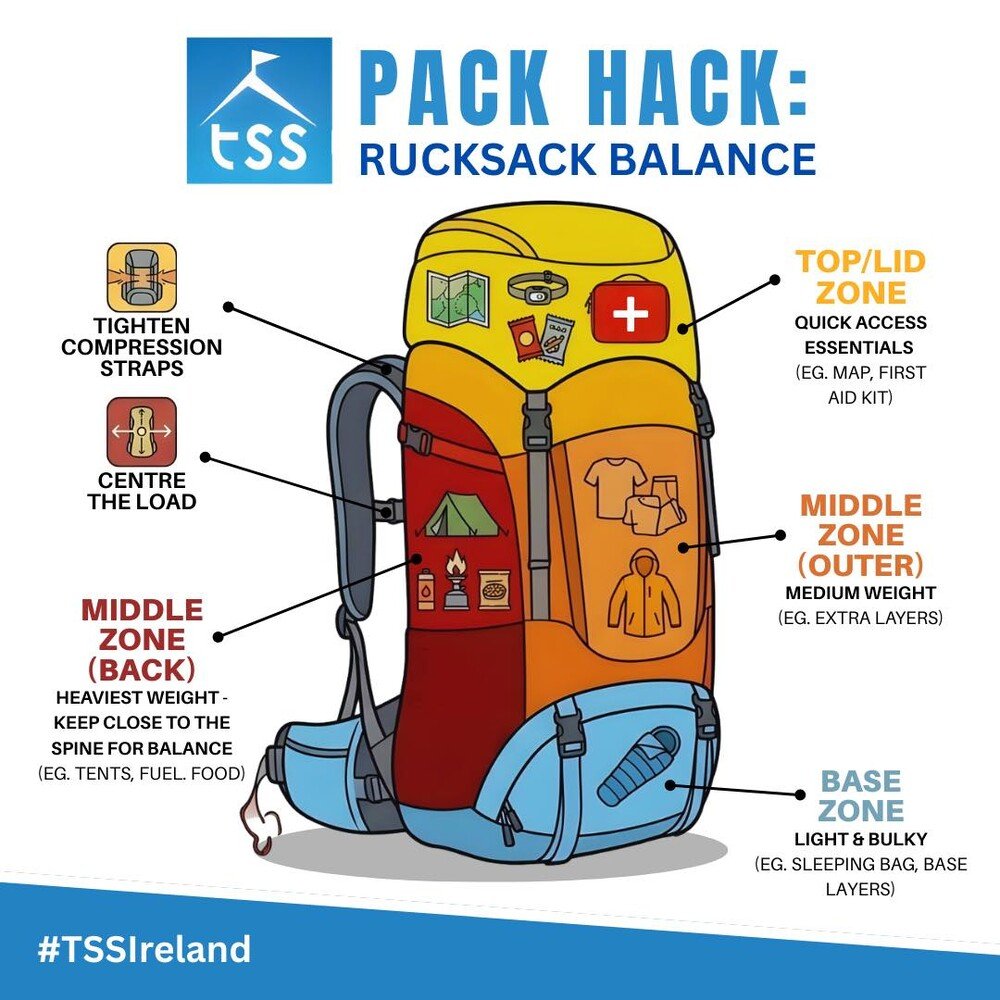
When going away on a camp or excursion it is important to make sure that you pack your rucksack correctly and properly to allow for equal balance and weight distribution across your back. Poor packing doesn’t just make the bag feel heavier—it can strain your shoulders, affect your posture, and over time even lead to discomfort or injury in your upper, mid, and lower back. A well-packed rucksack should sit snugly against your body, with the heaviest items placed close to your spine and centered between your shoulder blades. This keeps your centre of gravity stable and reduces the risk of muscle fatigue or imbalance when walking over long distances or uneven terrain.
Comfort is just as important as balance. If you’re carrying gear for extended periods, small details—like adjusting the shoulder straps, chest strap, and hip belt—make a big difference. The hip belt, in particular, should take most of the weight, allowing your legs rather than your back to do the work. Taking the time to pack thoughtfully before setting off will make your entire excursion far more enjoyable and sustainable.
That’s why having a solid list of rucksack essentials is so useful. While the exact items may vary depending on whether you’re heading out on a short group hike or a longer solo adventure, there are a few core items that should almost always be included.
A First Aid Kit is essential for any activity. Even a small kit can make a big difference in dealing with minor cuts, blisters, or unexpected injuries. It’s best stored somewhere easily accessible, such as a side pocket or a zippered top compartment, so you don’t have to unpack everything to reach it in an emergency. Alongside this, hydration is critical. Carrying enough water—whether in bottles or a hydration bladder—not only keeps you refreshed but also helps prevent dehydration, which can quickly become a serious issue during long walks or physically demanding activities. For longer trips, you might also consider water purification tablets or a portable filter as a backup.
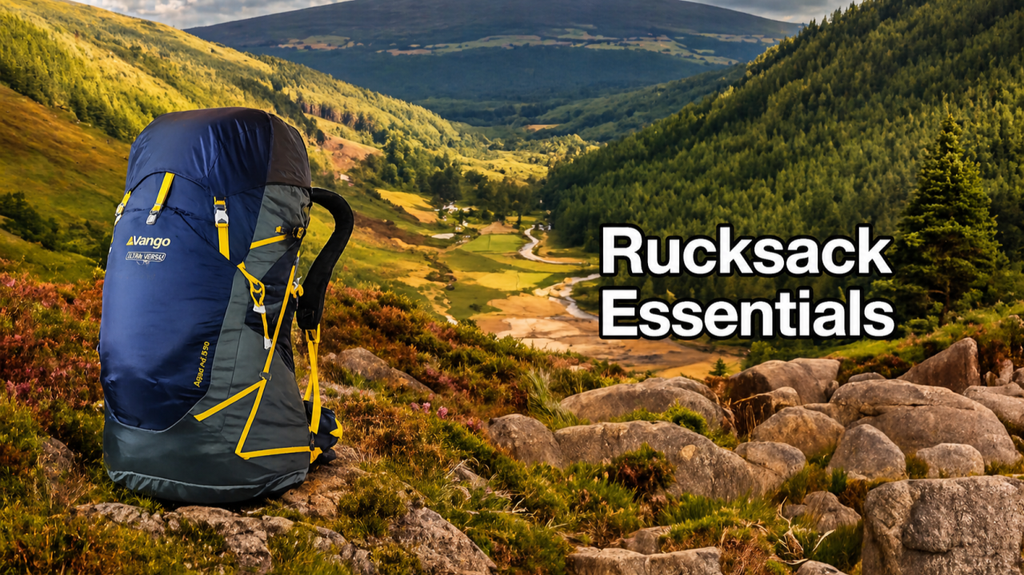
If your trip involves staying overnight and camping alfresco, then having a reliable place to sleep is equally important. A tent provides shelter from the elements, protection from insects, and a sense of security. A standard 3-man tent is often a good choice, even for one or two people, as it provides extra space for gear storage and comfort. Most modern tents are designed to be pitched quickly—often within 10 minutes once you’re familiar with the setup. Brands like Vango are popular for their durability and ease of use, though the best choice ultimately depends on your personal needs, budget, and the conditions you expect to face. Some people prioritise lightweight designs for hiking, while others prefer sturdier models with more room for storing boots and equipment just outside the sleeping area.
Beyond these basics, you may also want to consider additional essentials such as appropriate clothing layers, a sleeping bag suited to the weather, a ground mat for insulation, a headlamp or torch, and some form of navigation like a map and compass. Packing smartly and preparing for different scenarios ensures that you’re not only safe but also comfortable, allowing you to focus on enjoying the experience rather than worrying about what you might have forgotten.
For what to pack in your Rucksack including placements of items have a look at the Graphic below provided by The Scout Shop